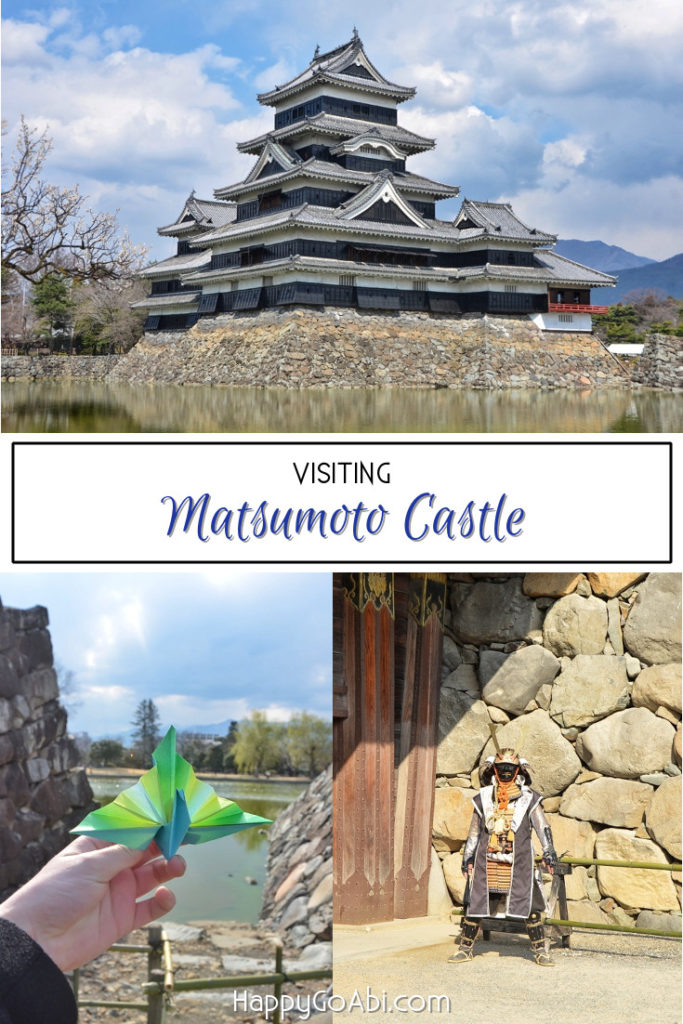
When you think of a castle, the first images that come to mind likely include stone towers, moats, and drawbridges—a fairy tale, Disneyfied, and decidedly European picture that conjures up once-upon-a-times and happily-ever-afters. But did you know that Japan has castles too? Although the architecture certainly contrasts with the European style, both western and eastern castles were usually created for the same purpose: to act as a stronghold to protect leaders and inhabitants and defeat any intruders. Like the history of European/western castles, the history of Japanese castles is fascinating and includes stories of princesses and brave warriors alongside more unique, local legends. Matsumoto Castle is one such legend-filled castle and stands out among the castles of Japan with its striking construction and its status as the second-oldest and most complete surviving castle in Japan. Located perfectly for a pleasant day trip from Tokyo, Matsumoto’s towering frame and beautiful grounds are filled with history and mythology that will charm and delight you.
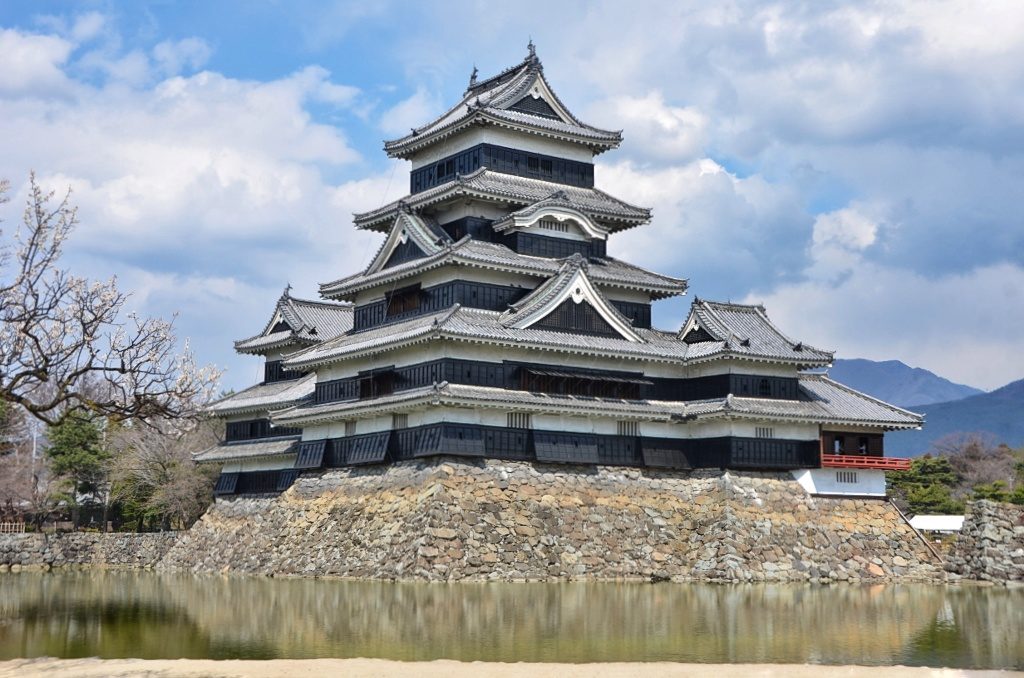 To visit the castle, you can take yourself on a self-guided tour or take a free guided tour in your language (English, French, Spanish, and Chinese are some of the languages offered). Both options require you to pay the castle’s entrance fee, which is currently 610 yen (approximately $6), but taking the free tour with a guide allows you to hear about stories and facets of the castle that you would otherwise miss. The Alps Language Service Association (ALSA) offers tours on a first-come, first-served basis if you show up on the day and look for their booth or their guides with badges, but you can also reserve one online for a time and date of your choosing so that you are assured you will have a guide who speaks your language and is available when you are there. Our guide met us at the gate and entered with us, taking us on a fascinating, whirlwind tour of Japanese feudal society and the various stages of life at the castle.
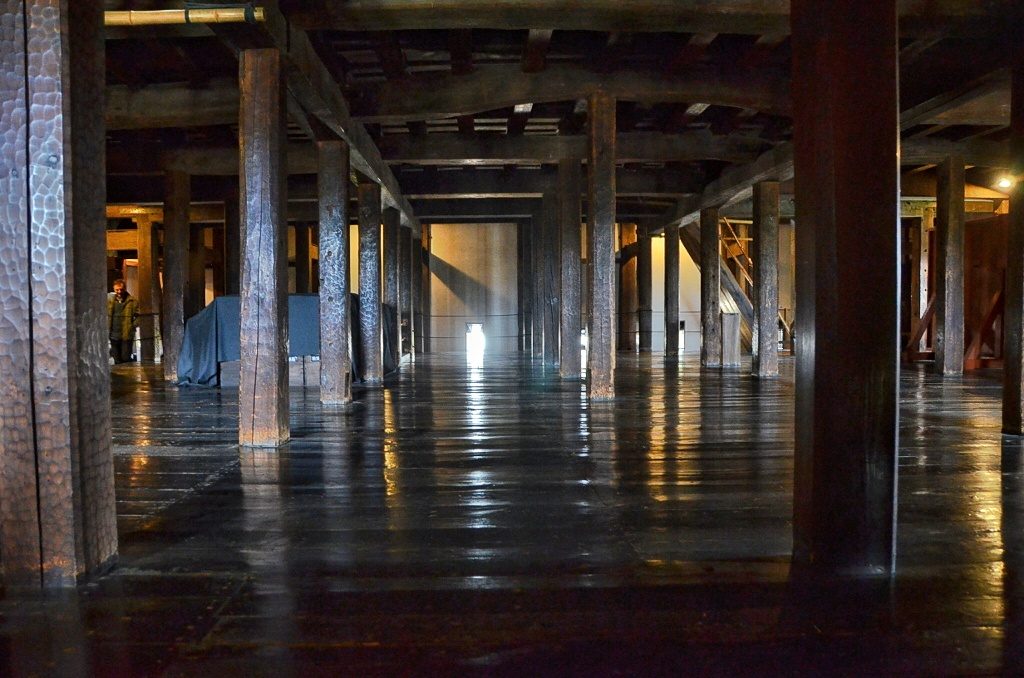 As you enter the main building, you must take your shoes off and will be given a plastic bag to carry them with you (the floors in winter can be quite cold, so wear thick socks if you go during this time!) The first things you will notice as you enter the main donjon/keep are the wooden beams and wooden flooring that make up the entirety of the interior. Hewn from spruce, hemlock, and fir trees, this interior has lasted through over four centuries with only some renovation to keep the structure stable. At some point in the last four centuries, Matsumoto became known as the “Tilting Castle” and had its own legend about a farmer named Kasuke Tada cursing the structure after being treated unfairly by the castle occupants…but in reality this tilting was caused by the main pillar in the foundation beginning to rot (it has since been repaired and replaced to make the castle stable again).
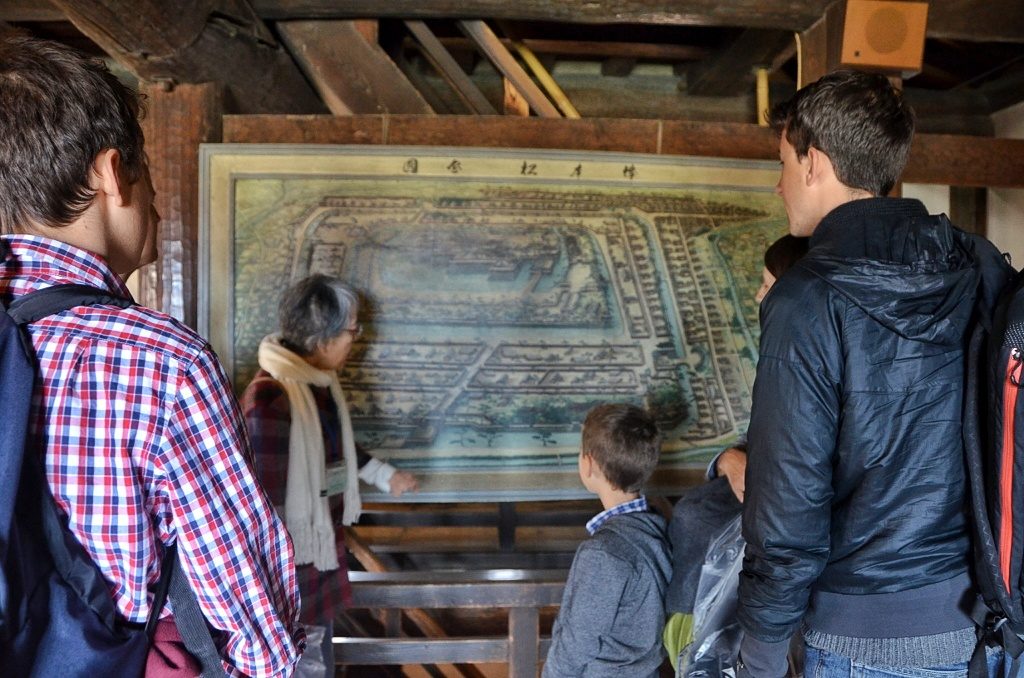 Our guide took some time to show us an early map of the castle, grounds, and town alongside where the original lines of defense were. When Matsumoto Castle was built during the years 1592-1614, it was created as a fortress or stronghold because peace had not yet been obtained in the land. However, the castle is built on the plains instead of on a mountain or hill, which makes it more difficult to defend from invadors. To improve its defense capability three layers of moats were constructed, the external stonework acted as castle armor, numerous slots and windows were constructed for gun and arrow warfare, and samurais lived in the area within the three moats as a final method of defense. Additionally, one of the most interesting structural aspects of the castle is that there is an extra floor inside that is not apparent from the outside. While externally it appears the castle has five floors, inside you will find there are actually six because the outside is built to conceal an extra room that allows the inhabitants to mask some of their defenses.
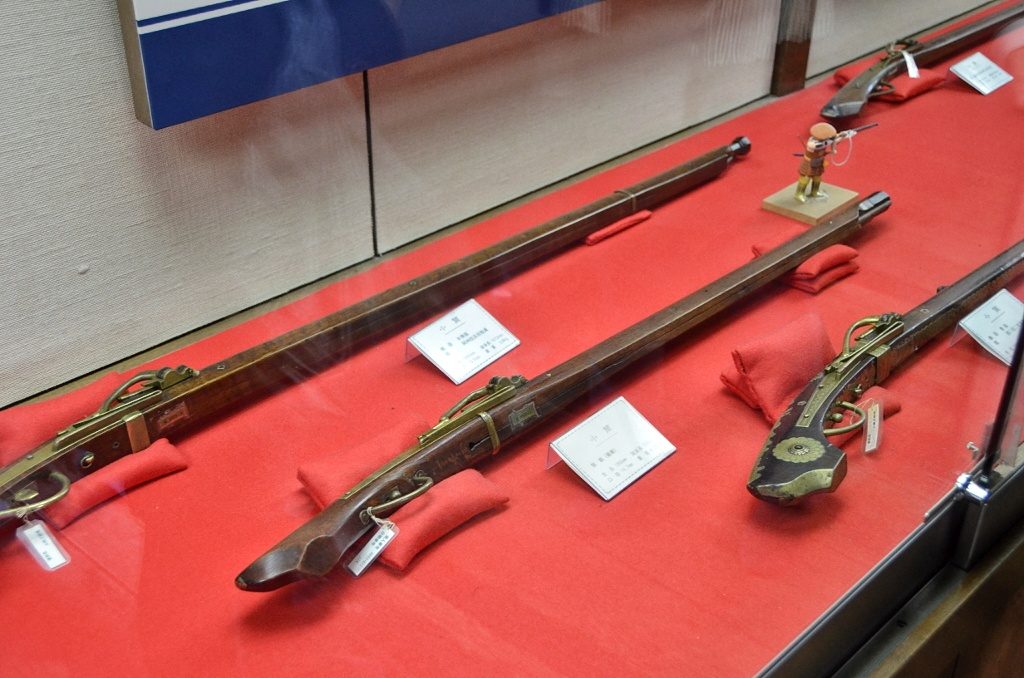 If you are interested in weapons, war, or Japanese battles in particular, you will be thrilled to find that the second floor of the main donjon houses an assortment of armor, guns, and other weapons. This impressive collection was accumulated and later donated to the city by local Matsumoto resident Akahane Michishige and his wife in 1991, and is well worth a wander on your ascent through the castle.
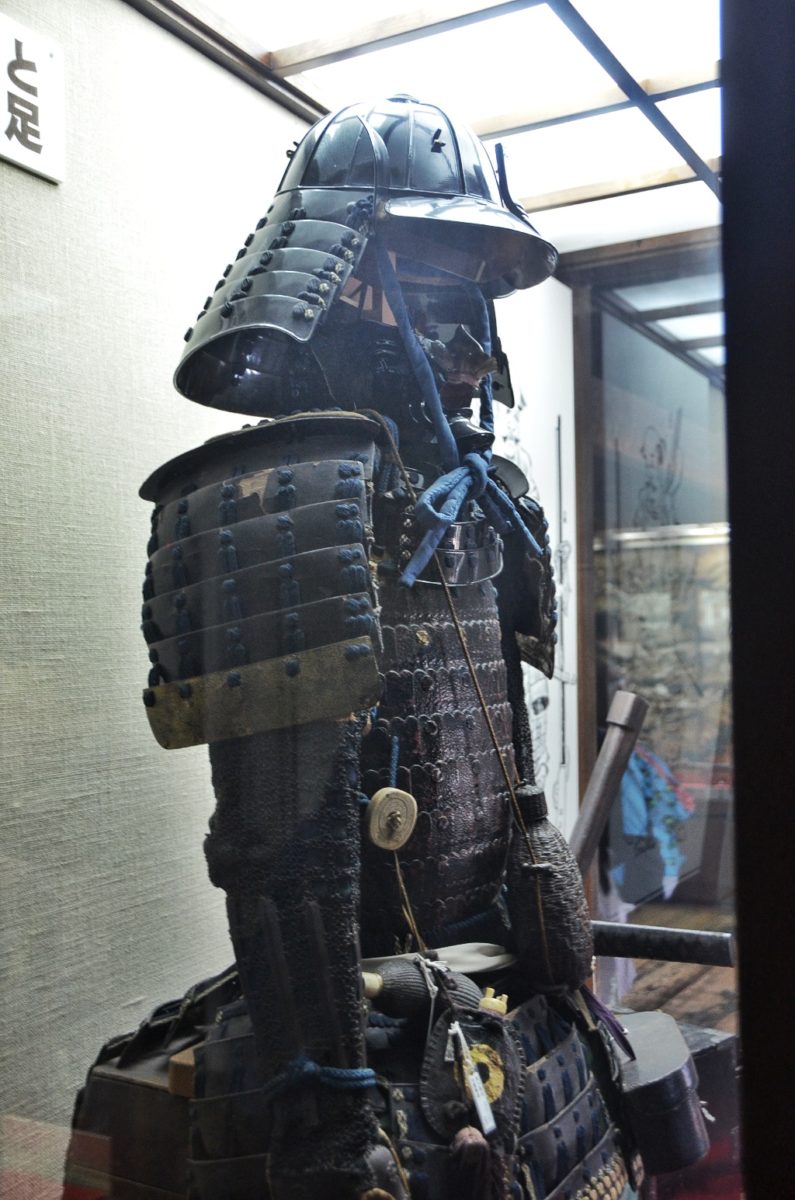 Of particular note in the second floor museum (for any Star Wars fans) are the suits of armor in the style that inspired the Darth Vader costume. The kabuto is a helmet used by Japanese warriors that later became a traditional part of armor worn by the samurai class, and as you can see above it bears a strong similarity to the apparel of Darth Vader and other costumes found in the Star Wars universe. It is well known that George Lucas drew inspiration from Japanese culture in creating his epic space opera, and it is fun to see evidence of this in the armor collected in Matsumoto Castle.
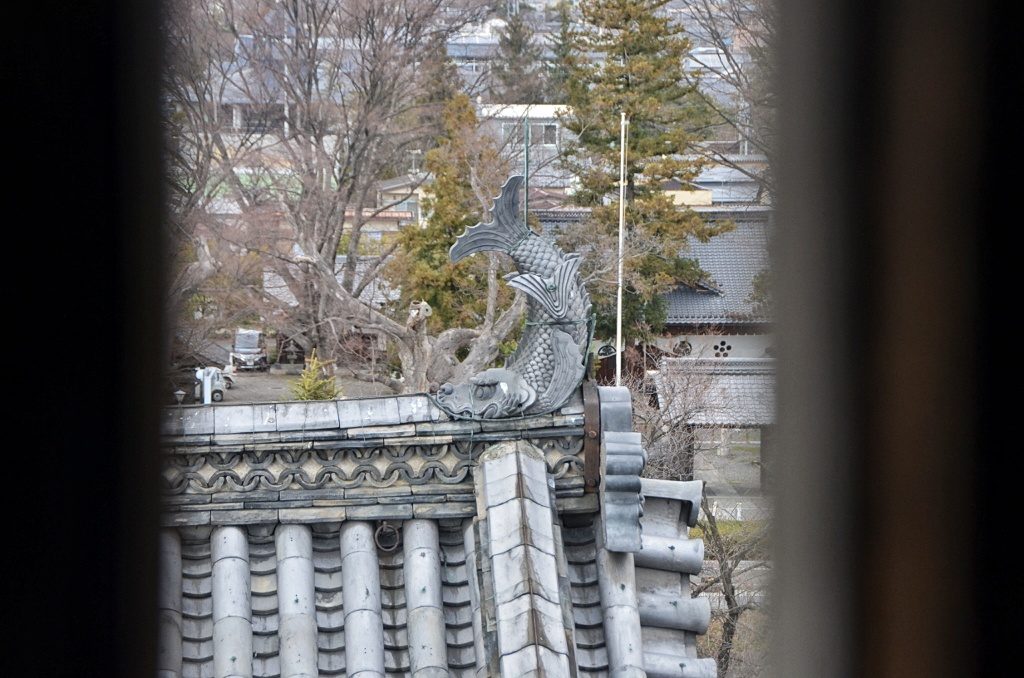 Finally, as you ascend the floors of the castle, be on the lookout for glimpses of the roof and its ornate tiling. On some sections of the roof you will also spot statues called shachihoko. These figures have tiger heads and the body of a carp and in folklore were commonly believed to cause rain to fall. If you remember back to your first sight inside the castle, you will realize that the entire castle interior is built out of wood and as such is at high risk to spark a blaze and bring the whole structure down in flames. The castle builders and residents realized the importance of protecting the castle from fire and placed shachihoko on the roof as a talisman to cause rain to fall and keep disaster at bay.
Other Fun Aspects of Matsumoto Castle
 Throughout each day, the Matsumoto Castle Hospitality Team dress up as armored warriors and princesses and walk around the gardens and near the castle. Sometimes you will even spot ninjas as they pace the gardens (I guess these ones aren’t stealthy enough to be invisible all the time). All the members of the hospitality team are willing to take photos of you and your friends/family with the castle, and they also are happy to be in your photos with you—just ask!
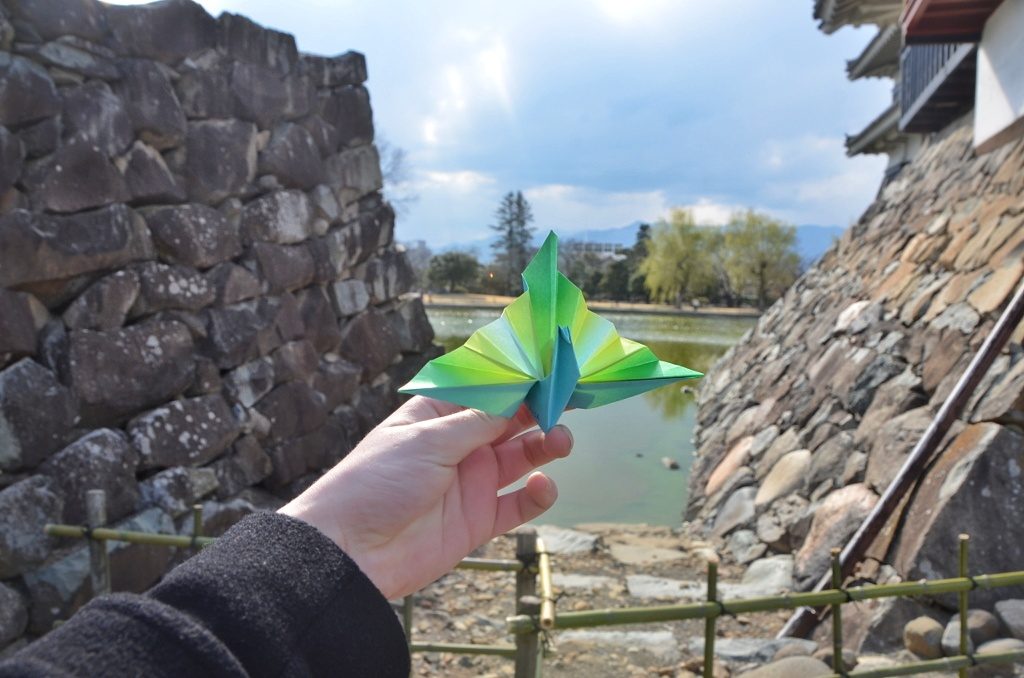 If you choose to take a guided tour, it is possible that your guide will give you origami at the end. Our ALSA guide did this for us and I have heard from several other people that their guides did as well. Such a fun way to end an interesting tour!
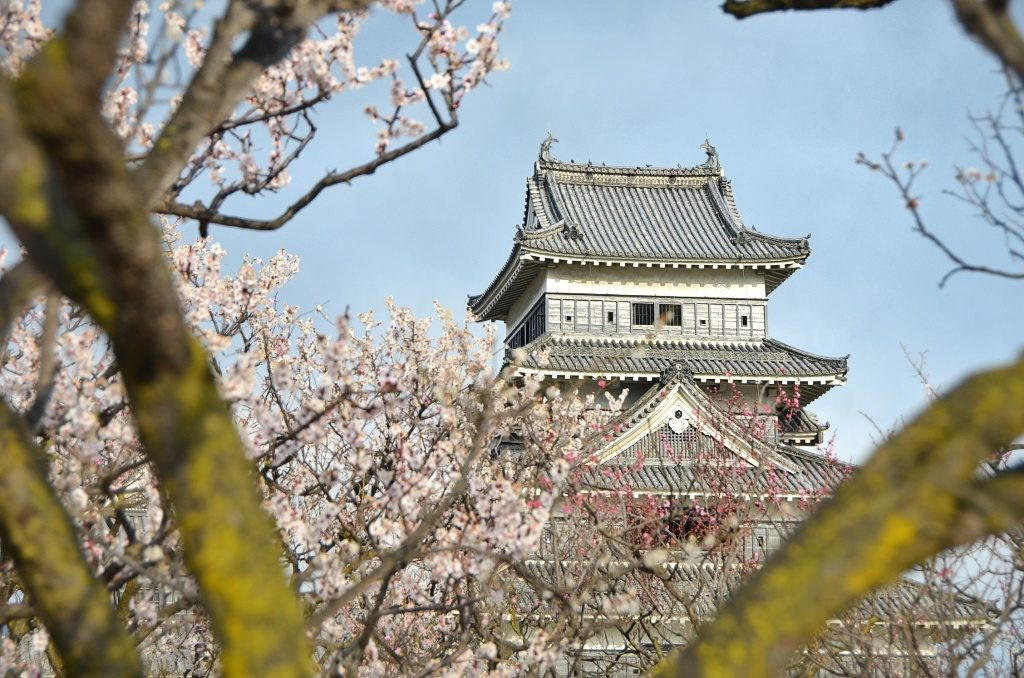 Matsumoto Castle also hosts many events throughout the year, including cherry blossom viewings. Of course, you are welcome to come view the beautiful blossoms on your own, but if you are interested in a specialized event or any other extra experiences you can check out the official Matsumoto Castle website for a list of upcoming events.
Liked this article? Pin it!