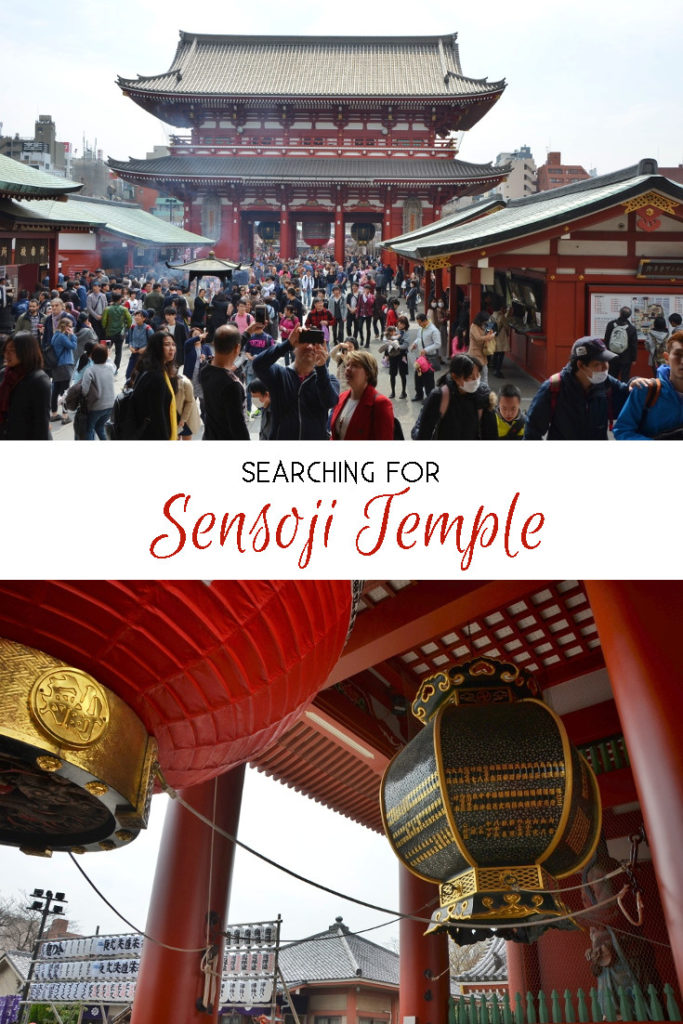
Sensoji temple. Vibrant, popular Sensoji.
It came upon us, mostly, as a surprise. While most tourists visit this temple by taking the subway to the Asakusa station, then walking under the Kaminarimon (Thunder Gate) and through the shopping street Nakamise, we instead took the road less traveled and walked from a nearby Japan Rail station. This meant we could see a little more of the surrounding area, and it also meant our first view of the temple was a little bit unexpected and unannounced. We’re here? Oh, yes, we are.
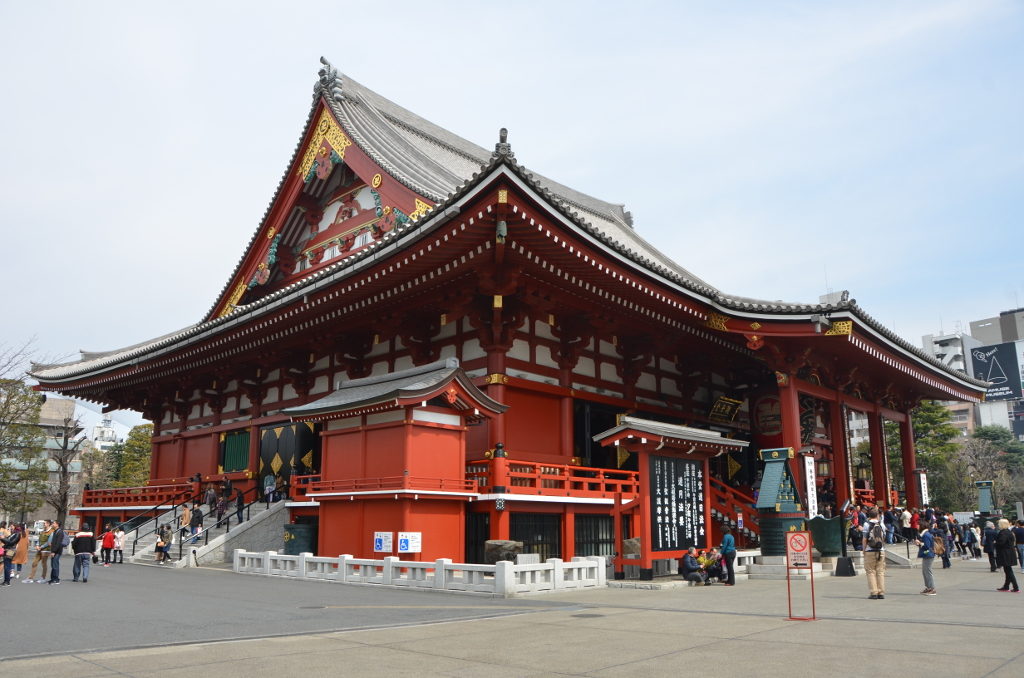
We jostled with the dozen-or-so other visitors on the steps and climbed up to the entrance of the temple.
And then turned around.
“The people–there are so many people!” was my first thought. It shouldn’t have been such a surprise; after all, Sensoji Temple is one of the most popular and accessible temples in Tokyo (as a simple google search will tell you). Yet without having elbowed our way through the crowd to reach the temple building, the sight of so many people rushing to reach or leave the temple building momentarily stunned me.
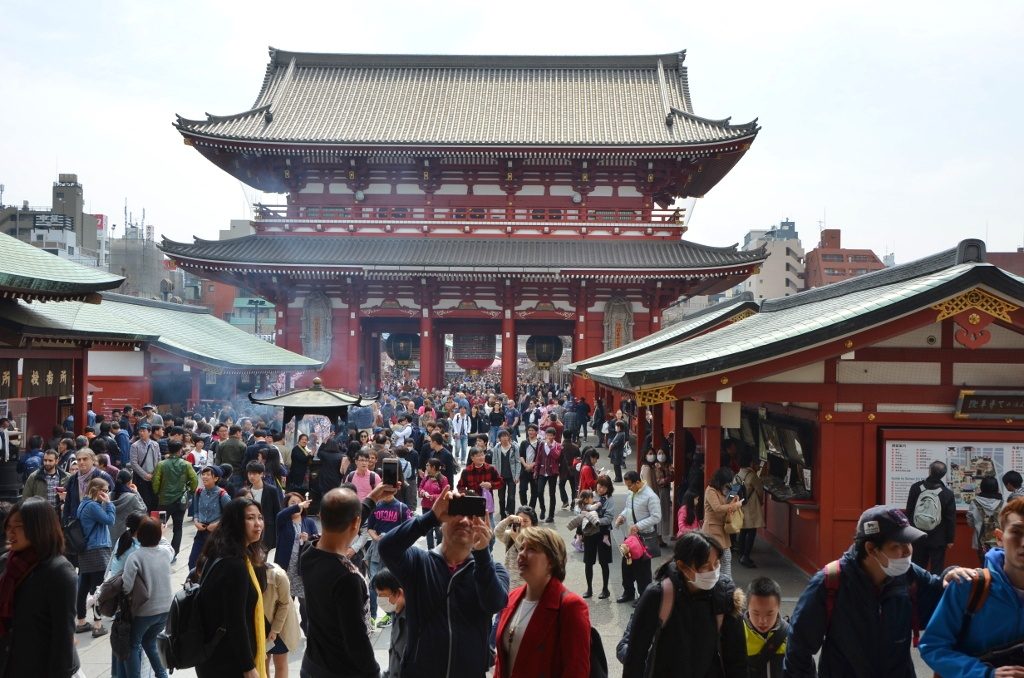
Although tourists and travelers often try to avoid the crowds (a perfectly valid method of traveling, though it might mean waking up super early), seeing so many people scrambling to take selfies at Sensoji set against the immensity of the temple gate is a truly interesting experience. If you’re into people watching, this is a prime spot to go. Everyone is here to experience a bit of the temple and document it for themselves, while it feels like instead we should all just be marveling at the striking orange and the immensity of the buildings.
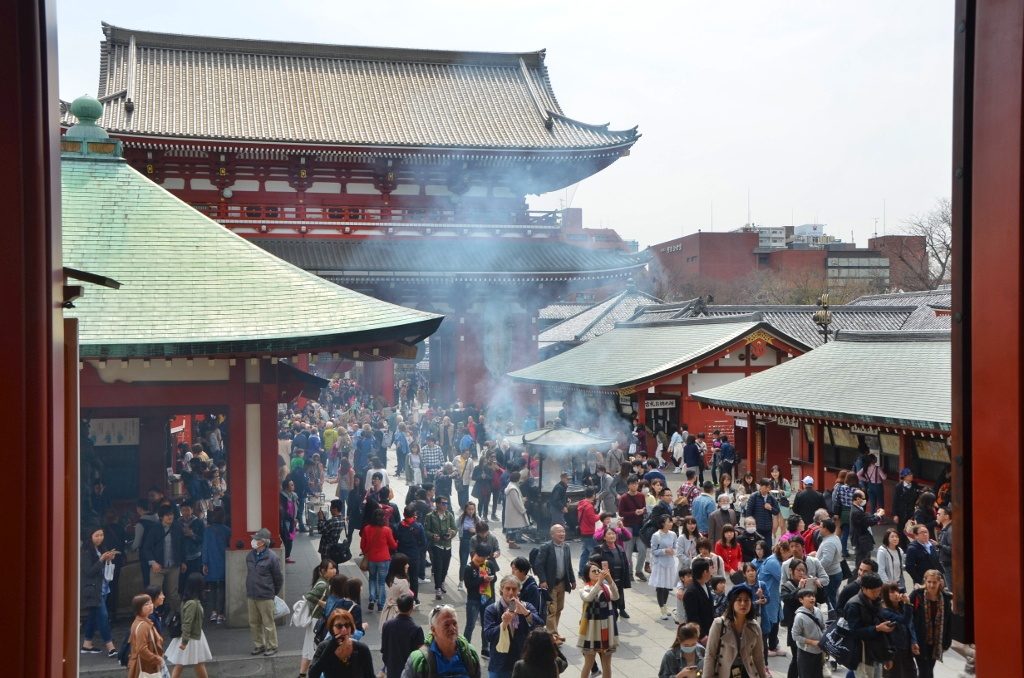 We work our way down the steps and through the clusters of people, while the scent of incense wafts across the crowd. The air is filled with chattering in so many languages it becomes hard to identify any at all, and men and women dressed in traditional Japanese attire dot the landscape as they make their journeys to the temple. Not only is this a pilgrimage for tourists, but it is a pilgrimage for religious observers as well.
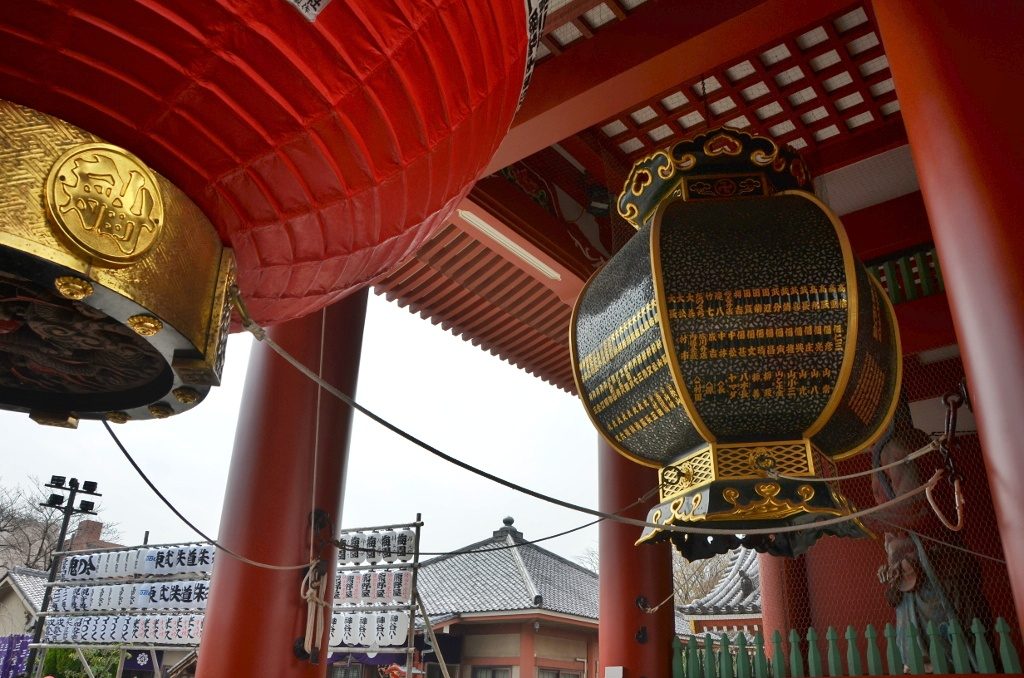
As the large number of people here demonstrates, who can resist visiting a temple with construction dating from the 7th century? Especially when its in the middle of Tokyo and is so easy to reach? Japan Guide writes of the founding of Sensoji:
The legend says that in the year 628, two brothers fished a statue of Kannon, the goddess of mercy, out of the Sumida River, and even though they put the statue back into the river, it always returned to them. Consequently, Sensoji was built nearby for the goddess of Kannon. The temple was completed in 645, making it Tokyo’s oldest temple.
Many of the temples have legends that accompany them, and it is fun to take the time to read guides like this one from Japan Guide and learn more about the temples while experiencing the sights in real life.
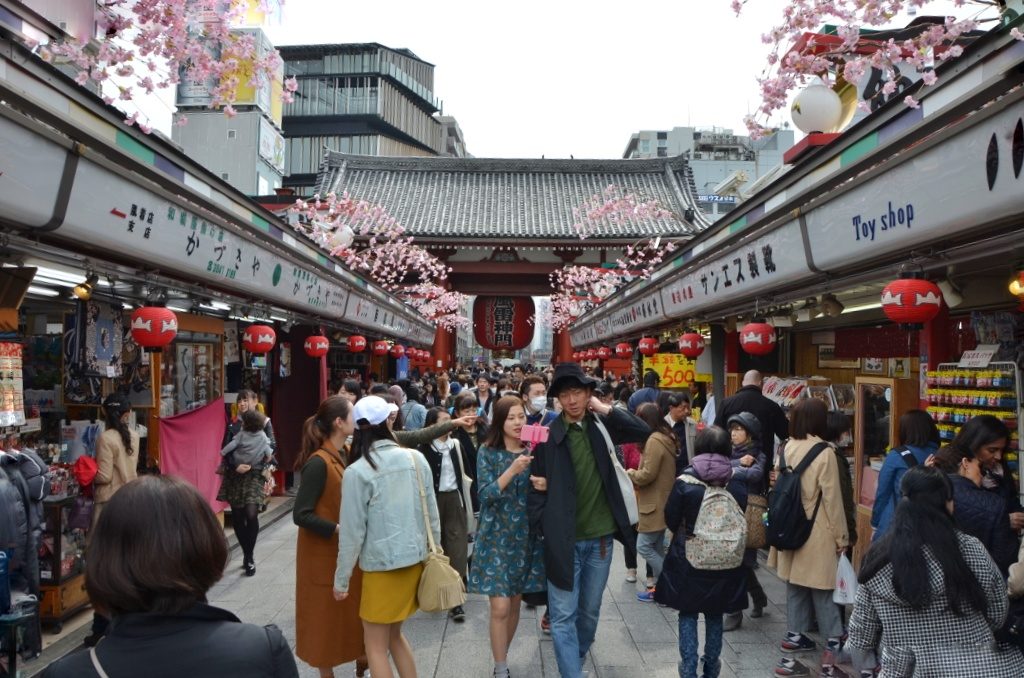
Festivals are also held here throughout the year if you care to come during an even more populated time, but just taking an afternoon and admiring the architecture is time well-spent even without an event to draw you there. Take the well-known path and enter through the main gate, or go off the path and walk from a further station and search for Sensoji on your own. Either way, you’re in for a stunning experience.
Liked this article? Pin it!