

When traveling or simply living life, we all get caught up in the whirl and the routine and it becomes hard to stop and really reflect. But sometimes you have to pause and ask yourself the important questions in life. For instance: have you really lived—and I mean really lived—until you’ve fist bumped Amenhotep III? If you haven’t, you simply must fix this by visiting the British Museum! Read on to learn about ten incredible objects in the British Museum that you should see during your visit.
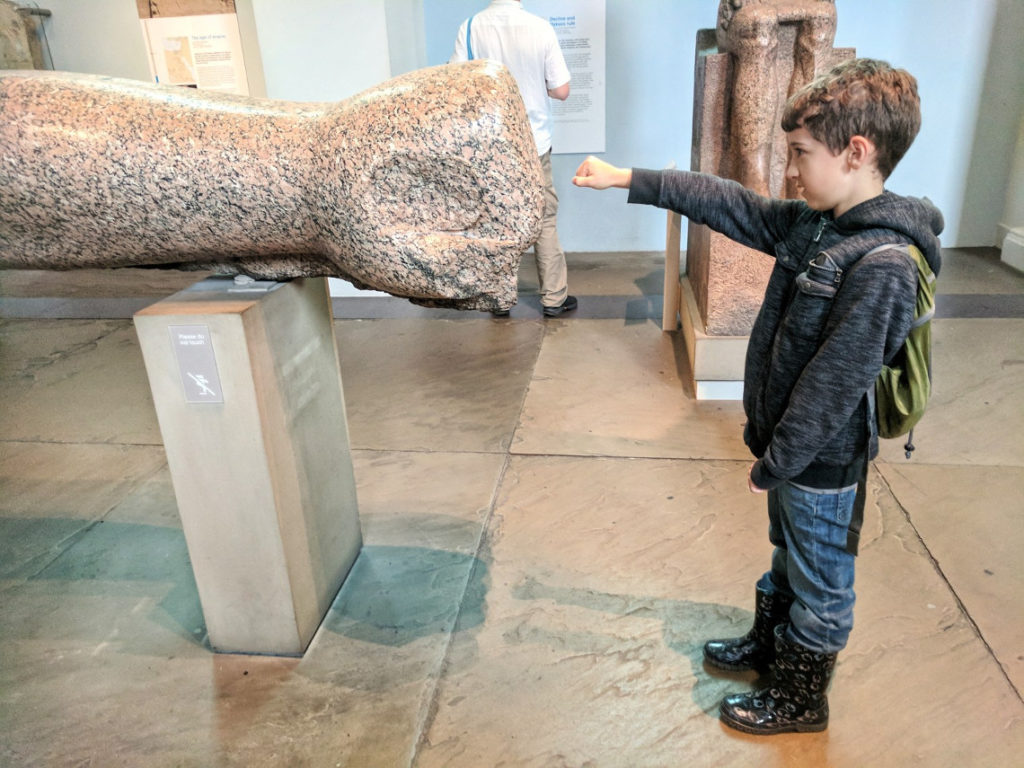
There are far more items at the British Museum than anyone could examine in a lifetime. Some are well-renowned, others are underappreciated. Some legitimately belong to the museum, others are questionable acquisitions. Yet if you are in London, the British Museum is an excellent place to spend the day and discover cultures from around the world. It is easy to become overwhelmed with the wealth of objects to explore, so the following is a compilation of a few of my favorite items as suggestions on where to start. From some of the classic must-sees to more unusual treasures, here are the ten items I find most exciting and essential to find while at the museum.
1. The Royal Lion Hunt
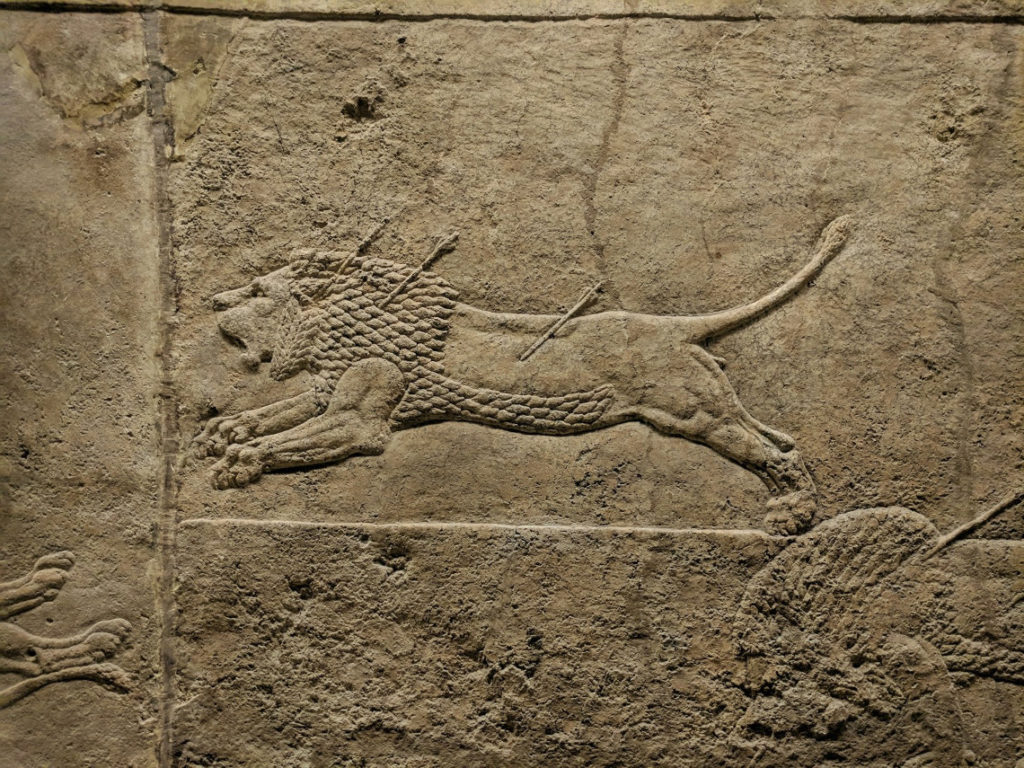
This Neo-Assyrian gypsum wall panel, likely created between 645-635 BC, displays the ruler Ashurbanipal on a lion hunt with his attendants. Despite the sad nature of the subject matter (those poor lions!), this panel makes the list of must-sees because of the incredible level of detail in the carvings. Notice the lions’ visceral reactions—their jowls hanging open in pain, arrows embedded in their skin, manes flowing as they leap away from the oncoming slaughter, and the tension of the sinews in their arms. The artistry is stunning in its realistic display here as well as in other panels where the chariots and horses flourish in almost three-dimensional quality. Make your way to Room 10 to experience this breathtaking creation for yourself.

2. Copper Helmet and Crushed Skull
Museums are frequently filled with various manifestations of death, but few exhibits are as intrinsically gruesome and intriguing as this copper helmet with the crushed skull of a young man still inside it. Likely from 2600 BC, it was discovered at the King’s Grave in the Royal Cemetery of Ur. One explanation for this object is that the royal guard took part in a rather unpleasant suicide rite to follow and accompany his king into the afterlife. Regardless, it is a fascinating object to see and to learn about the scholarship surrounding the helmet and the Standard of Ur. You can find it in Room 56.
3. Three Stone Dramatic Masks
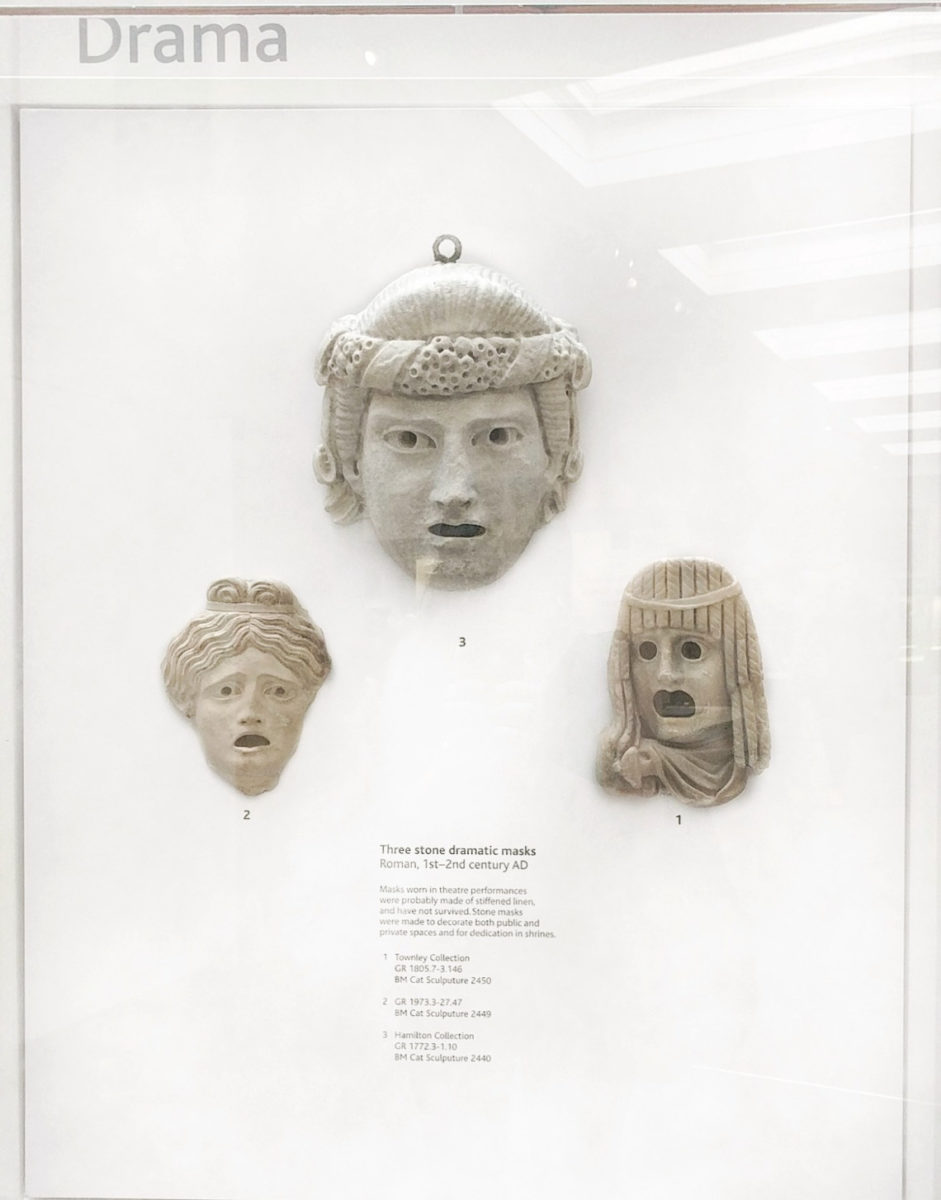
What’s a visit to a museum without a little drama? And drama is definitely what you get with these three chaps and the displays nearby. Let’s be honest, the mask on the right (1) was probably the expression on your face when you read about the helmet with a crushed skull inside (the curator calls it a “tragic” mask, and I’m inclined to agree as it definitely looks flabbergasted and distressed). All three of these masks are made of stone and are from the 1st-2nd century AD, with the top one (3) possibly depicting Dionysus, the god of fertility and wine. Marble masks were common ornaments in this era for various purposes including use in shrines, but were most likely not worn by actors during performances as ones made of fabric would have been far more reasonable and feasible. Stop by Room 69 on your grand tour of the museum if you need a break from the heaviness of the other exhibits…there’s nothing quite as good for a quick pick me up as mimicking the expressions of a group of stone faces!

4. Saintonge Vase
While wandering the Medieval Europe (1050-1500) gallery, the luminous colors of this Saintonge Jug caught my eye. Its glazed exterior and bright coloring makes it immediately charming, while its shape—parrot-beak spout, strap handle, and egg-like silhouette—indicate that it was created to hold and pour wine. To modern eyes accustomed to sparkling wine glasses and bottles, this jug may appear rustic and simple. Yet its comparatively smooth, refined, and delicate clay alongside the use of multiple colors indicates that it was a sophisticated jug intended for use by a prosperous household. Whether the history and craft of pottery is of interest to you or not, this object deserves a place in your museum excursion because of its alluring, seemingly simple yet actually meticulous construction. (Bonus reason to visit: the bird painted on the jug reminds me of the comic Trash Bird, which always brings a smile to my face). Head to Room 40 to see this lovable object in person.
5. Tristram and Isolde Tiles
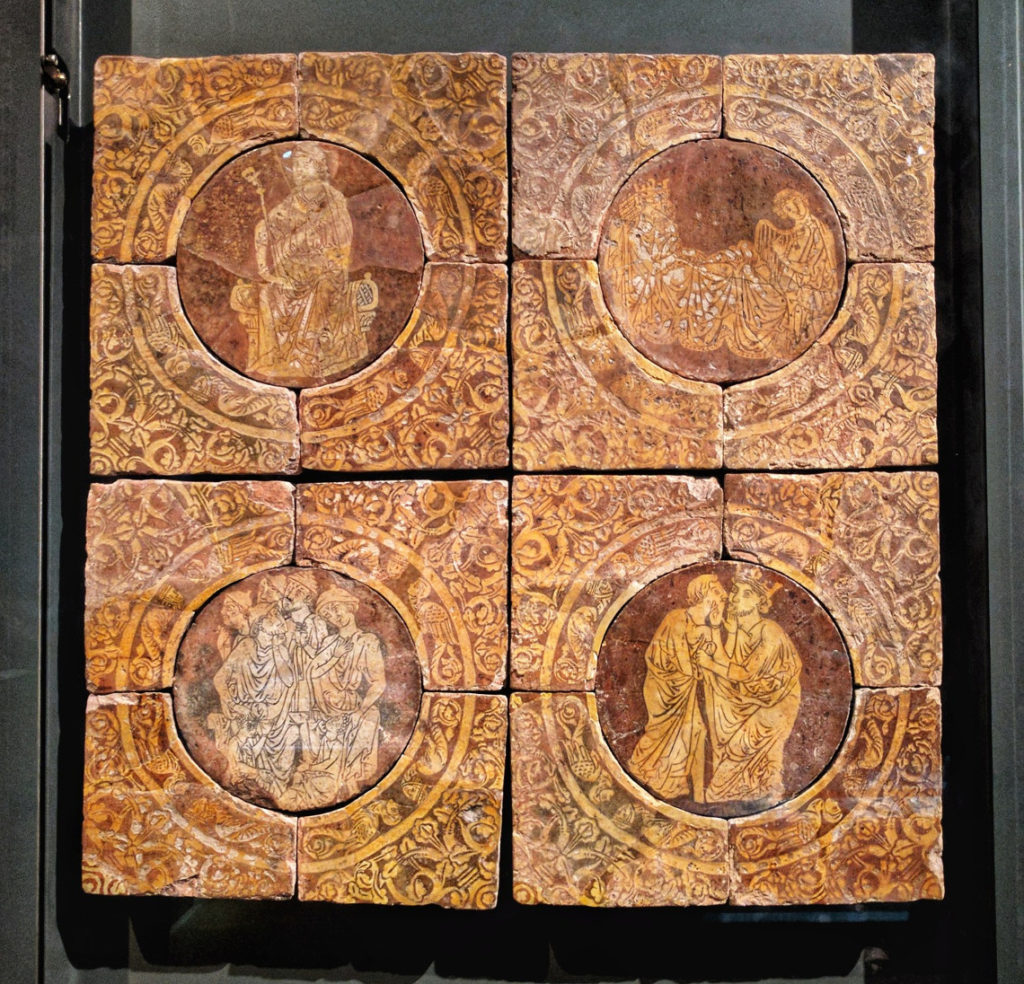
When most people think of star-crossed lovers, Romeo and Juliet spring immediately to mind. But long before Romeo and Juliet and even before the stories of Lancelot and Guinevere, there was an original star-crossed pair of lovers: Tristan and Isolde. Popular during the 12th century, their story has been told and retold with many variations across the ages, becoming one of the most influential romance tragedies in the world. As such, it is not surprising that this tale inspired representations across multiple artistic formats including literature, music, ivory caskets, quilts, and even floor tiles! Looking for your next romance read? Pick up a copy of the story by Beroul or Gottfried von Strassburg and Thomas, then drop by the British Museum to see these lead-glazed earthenware tiles from the late 13th century. Scenes depicted on the four currently displayed include the Cornish barons in conference together, King Mark kissing his nephew Tristan, the Duke of Brittany who appears in several versions of the tale, and Tristan playing a triangular harp for his uncle King Mark while he is ill. The tiles are housed in Room 40.

6. Vindolanda Tablets
These tablets from the Roman fort Vindolanda date from approximately 92-120 AD and are the oldest handwritten documents from Britain. You’ve got to admit that’s incredible. While I was studying palaeography at the University of Oxford, I was extremely excited about seeing these face-to-face…er, face-to-tablet. But I’m not just enthusiastic about them because of my academic interest. I’m also enthusiastic because I love birthday parties and eavesdropping on other peoples’ lives. Did Claudia Severa know that someday everyone in the world would be reading her birthday invitation to Sulpicia Lepidina? She writes: “Sister, for the day of the celebration of my birthday, I give you a warm invitation to make sure that you come to us, to make the day more enjoyable for me by your arrival.” I love that we have surviving records from so long ago of individuals, including women, and the mundane events of their lives. Fragile and delicate, these tablets are a wonder! You can find them in Room 49.

7. Bronze Foot-Guards
As much as I applaud the notion of soldiers protecting their feet from danger during battle, these foot-guards beg many questions. How are you supposed to wear them? Over your shoes? If so, why are they shaped like toes? And if you aren’t supposed to wear them over shoes, does that mean you are going into battle barefoot like a hippie Roman soldier? After much thought, I’ve decided that maybe these foot-guards were meant to aid the wearer by confusing their opponents—allowing them to strike while the enemy stared at their feet in bewilderment. The museum isn’t much help in regard to their usage, merely noting that this is one of few examples to survive: “They may have proved too cumbersome to be of practical benefit.” For the curiosity value and the amusement, be sure to see these gems in Room 69.
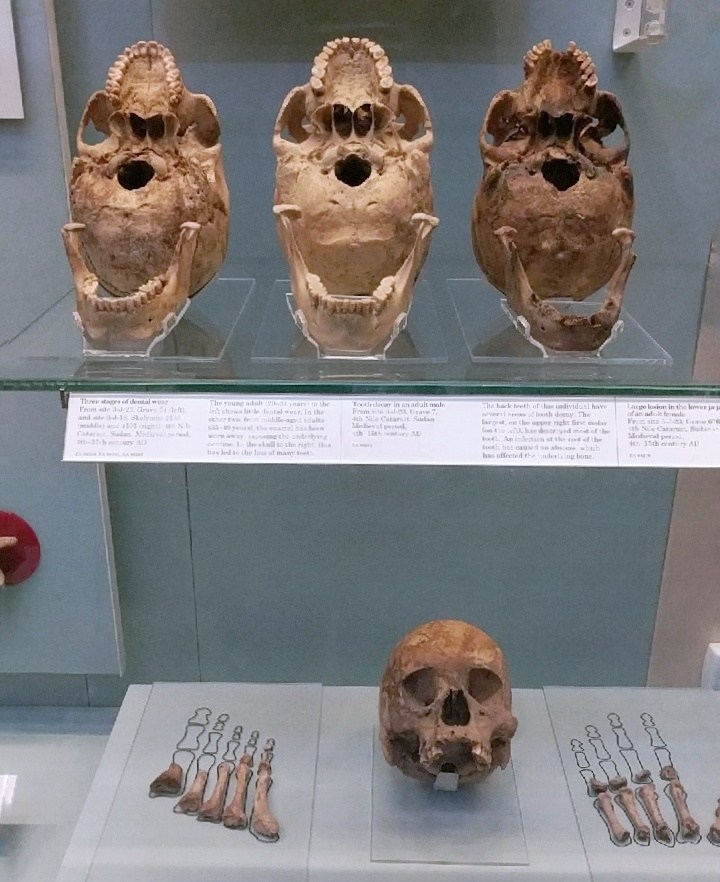
8. The Human Body in the Nile Valley
One more macabre exhibit for the books! This one focuses on disease and the human body, including displays on dental diseases, leprosy, and cancer. It is astounding to think about the lives of all the people whose bones are laid out here, as none of them could have possibly known they would end up in a museum for millions of visitors to see. Where will we end up when we die? Particularly riveting is the display on stages of dental wear, so be sure to look for this exhibit in Room 63!

9. Goat Fresco Fragment
I think this piece is charming and worth seeing because of its mundanity. As a simple piece of wall-plaster, the time and labor that went into decorating it with a fresco has elevated it to a piece of art worthy of showcasing in a museum. The goat/capricorn gambols against the dark black background, while the border of white, blue, and red attests that it was once a boldly colorful example. Broken in pieces but now partially rejoined, this fragment illustrates the enduring nature of art and history. Find it in Room 49 with a collection of other fresco fragments.

10. Papua New Guinea House Post
This carved wooden house post with a human form was originally the upper portion of a haus tamberan—a type of traditional ancestral worship house in Papua New Guinea. Although it is somewhat weathered now, the museum writes that it was once part of an aggressive assertion of power in a society that emphasized male warefare. Yet there is something almost hopeful, almost pleading in its expression, and it reminds me a bit of Groot from Guardians of the Galaxy, so it makes me smile every time I see it. This house post is an interesting artifact from a different culture than the typical European and Egyptian relics most people gravitate toward during their time at the British Museum, so I recommend making the time to view it and the other exhibits in Room 24 during your visit.
Like this article? Pin it!

Do you have a favorite, not-to-be-missed exhibit in the British Museum? I would love to hear about it in the comments!